

What documents are needed for a car loan application in Australia?
The information on this website is general in nature and does not take into account your objectives, financial situation, or needs. Consider seeking personal advice from a licensed adviser before acting on any information.
Introduction to Car Loan Application Process
Vehicle finance applications generally involve several stages, including identity verification, assessment of income and financial commitments, review of credit information and, for secured loans, confirmation of the vehicle details. Having the required documentation available can assist lenders in completing their assessment more efficiently.
Although each lender has its own application requirements, many request similar categories of documentation. This guide explains the documents most commonly requested during a car loan application and why they form part of the lending assessment process.
Personal Identification Documents
One of the first steps in any vehicle finance application is verifying the applicant's identity. Australian lenders are required to comply with identity verification and anti-money laundering legislation, making identification documents an essential part of the application process. Identity verification also assists lenders in protecting against fraud and confirming the applicant's personal details.
Commonly accepted identification documents include an Australian driver's licence, passport, proof of age card or other government-issued identification. Depending on the lender, applicants may be asked to provide one or more forms of identification, with at least one containing a recent photograph.
Lenders generally require identification documents to be current, valid and consistent with the personal details recorded on the application. Differences in names, addresses or expired identification may require additional verification before the application can proceed.
Identity verification is typically completed early in the assessment process, allowing lenders to progress to the financial assessment once the applicant's identity has been confirmed.
Proof of Income
Proof of income is commonly requested to assist lenders in assessing an applicant's capacity to meet the proposed loan repayments. Income information forms part of the lender's overall assessment of the applicant's financial position together with living expenses, existing financial commitments and other relevant factors.
The documentation accepted varies depending on the applicant's circumstances. Employees commonly provide recent payslips, while self-employed applicants may be asked to supply recent tax returns, financial statements or documentation prepared by their accountant. Some lenders also accept bank statements showing regular income deposits.
Income documentation should accurately reflect the applicant's current financial circumstances and meet the lender's documentation requirements. Some lenders specify how recent documents must be and whether original documents or electronic copies are acceptable.
Employment Verification
In addition to confirming income, lenders may also verify an applicant's employment status as part of the lending assessment. Stable employment may assist lenders in understanding the source and consistency of income, although assessment criteria vary between finance providers.
Employment verification may involve reviewing recent payslips, an employment letter or other documentation confirming the applicant's position and income. Some lenders may also contact an employer directly to verify employment details where appropriate.
Self-employed applicants are commonly asked to provide additional financial information because their income is assessed differently from salaried employees. Depending on the lender, this may include tax returns, business financial statements, accountant declarations or evidence of regular business income.
Understanding the types of employment documentation commonly requested can help applicants prepare the information required before beginning the application process.
Proof of Residence
Proof of residential address is commonly requested to verify the applicant's current place of residence and support the identity verification process. Residential information may also assist lenders in confirming the details provided in the loan application.
Accepted documents commonly include recent utility bills, council rates notices, tenancy agreements, bank statements or government correspondence displaying the applicant's name and residential address. Individual lenders may specify which documents they accept and how recent they must be.
Applicants who have recently moved or who do not have household accounts in their own name may be asked to provide alternative documentation. Requirements vary between lenders depending on individual circumstances.
Providing current and accurate address documentation helps lenders complete their verification process and may reduce requests for additional information during the application assessment.
Credit History and Financial Information
Credit history forms an important part of many vehicle finance assessments. Rather than requesting applicants to supply their own credit report, lenders commonly obtain credit information from a credit reporting body, subject to the applicant's consent. This information helps lenders understand an applicant's previous credit behaviour as part of their overall lending assessment.
Credit reports may include information such as current and previous credit accounts, repayment history information, credit enquiries and any reported defaults or court judgments. Lenders generally consider this information alongside income, living expenses and existing financial commitments rather than relying on credit history alone.
Some lenders may also request recent bank statements or additional financial information to better understand an applicant's current financial position. The documents requested and the way they are assessed vary between lenders and loan products.
Understanding how credit information is used during a lending assessment helps explain why lenders request financial documentation in addition to conducting credit checks as part of the application process.
Vehicle Information and Insurance
For many vehicle finance applications, lenders also request information about the vehicle being purchased. This information assists the lender in confirming the purchase details and, where applicable, assessing the suitability of the vehicle as security for the loan. The type of information required varies depending on whether the finance is secured or unsecured.
Common vehicle documentation includes the purchase contract, dealer invoice or private sale agreement showing details such as the purchase price, make, model, year of manufacture and Vehicle Identification Number (VIN). Some lenders may also request additional information about the vehicle's condition or value, particularly for used vehicles.
Where comprehensive motor vehicle insurance is required as a condition of the loan, lenders may request evidence that appropriate insurance arrangements have been made before settlement. Insurance requirements differ between lenders and loan products, particularly where the vehicle forms part of the lender's security.
Guarantor or Co-Borrower Documentation (If Applicable)
Some vehicle finance applications involve an additional borrower or guarantor where permitted by the lender's lending policies. In these situations, the lender generally requires documentation from each person involved in the application so that their financial circumstances can also be assessed.
Documentation requested from a guarantor or co-borrower commonly includes identification, proof of income, employment details and authority for the lender to conduct a credit assessment where applicable. Requirements vary depending on the lender and the structure of the loan.
Because a guarantor or co-borrower may assume legal responsibilities under the loan agreement, lenders generally require each applicant to complete the relevant documentation before the application proceeds.
Preparing Your Documentation
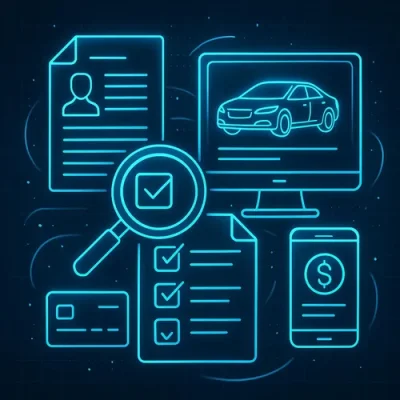
Organising documentation before beginning a vehicle finance application can assist in reducing delays during the assessment process. Keeping identification, income documentation, employment information and vehicle purchase documents together makes it easier to respond if the lender requests additional information.
Before submitting documentation, applicants may wish to check that names, addresses, dates and other personal information are consistent across all documents. Accurate and current documentation assists lenders in completing identity verification and financial assessment processes more efficiently.
Because documentation requirements vary between lenders and finance products, applicants are often provided with a checklist outlining the information required for their particular loan application. Reviewing these requirements before applying can help identify any additional documents that may be needed.
Conclusion
Preparing the documentation commonly requested for a vehicle finance application helps applicants understand the information lenders use when assessing a loan. Identity documents, proof of income, employment information, residential address details, credit information and vehicle documentation each contribute to different parts of the lender's assessment process.
Although documentation requirements vary between lenders and loan products, many request similar categories of information to verify identity, assess financial capacity and confirm the details of the proposed vehicle purchase. Understanding these requirements before applying can assist applicants in preparing the information commonly requested during a vehicle finance application.
Becoming familiar with the documentation typically requested by lenders also provides a better understanding of how vehicle finance applications are assessed in Australia. While individual lending requirements differ, preparing accurate and current documentation can assist the application process and reduce requests for additional information.
Published: Wednesday, 8th Jul 2026
Author: Paige Estritori



As a sole trader, the accountant letter and bank statements were the slowest bit for my car loan application, wish I'd sorted them earlier.