
SHARE

Share this news item!

Prolonged Algal Bloom in South Australia Devastates Marine Life and Local Industries

Environmental Crisis Leads to Mass Fish Deaths and Economic Challenges

Prolonged Algal Bloom in South Australia Devastates Marine Life and Local Industries?w=400

The information on this website is general in nature and does not take into account your objectives, financial situation, or needs. Consider seeking personal advice from a licensed adviser before acting on any information.

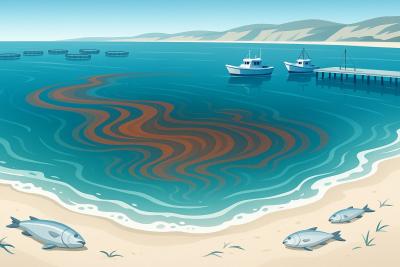
Since March 2025, South Australia has been grappling with a harmful algal bloom (HAB) that has severely impacted marine life and local industries.
The bloom, primarily consisting of the dinoflagellate Karenia mikimotoi, has led to mass fish deaths and posed significant challenges to the fishing and tourism sectors.

The bloom's extent is unprecedented, affecting approximately 30% of the state's coastline, an area roughly equivalent to 20,000 square kilometers. Despite hopes that winter conditions would mitigate the bloom, it has persisted and spread, now impacting regions including Gulf St Vincent, Spencer Gulf, Investigator Strait, and Backstairs Passage.

Marine biologist Mike Steer from the South Australian Research and Development Institute (SARDI) highlighted the severity of the situation, noting that the bloom's size and duration are unparalleled in both South Australia and Australia. The densest occurrences have been observed along the coast from the top of Gulf St Vincent down to Brighton Beach.

The causes of the bloom are multifaceted. Factors such as floodwaters from the River Murray in 2022-23, a cold-water upwelling in summer 2023-24, and a marine heatwave since September 2024 have contributed to the proliferation of the algae. Climate change-induced ocean warming and nutrient pollution are also believed to play significant roles.

The impact on marine life has been devastating, with over 500 species of fish, penguins, and marine mammals affected. Human health concerns have also arisen, with reports of asthma, skin and eye irritation, and coughing among beachgoers. The aquaculture, fishing, and tourism industries have suffered substantial economic losses, and several First Nations communities have described the ongoing bloom as a "cultural emergency."

In response, the state government has established an information website and hotline dedicated to the event and is working with federal authorities on mitigation efforts. Temporary fishing restrictions on certain species have been imposed to allow for recovery. However, the situation underscores the need for proactive environmental management strategies to prevent similar crises in the future.

Published:Monday, 12th Jan 2026
Source: Paige Estritori

Please Note: If this information affects you, seek advice from a licensed professional.

Share this news item:

Finance News

Australia Partners with Japan's Mitsubishi for $6.5 Billion Warship Fleet
22 Jan 2026: Paige Estritori
In a landmark decision, Australia has awarded a AU$10 billion (US$6.5 billion) contract to Japan's Mitsubishi Heavy Industries for the construction of 11 Mogami-class frigates. This agreement signifies the most substantial defense industry collaboration between the two nations to date. - read more
Marsh Secures Role in Australian Navy's Maritime Insurance Program
22 Jan 2026: Paige Estritori
Global insurance broker Marsh has been appointed by the Australian government to oversee the insurance and risk advisory components of the Royal Australian Navy's Maritime Insurance Program (MIP). This program is integral to the nation's extensive naval fleet expansion and infrastructure development initiatives. - read more
