
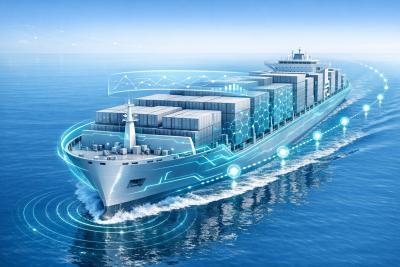
One of the key trends is the development of connected ecosystems that unlock economic synergies within the maritime sector. By integrating design, construction, and operations through shared data, companies can improve efficiency, reduce rework, and minimize waste. This approach is becoming essential for businesses aiming to stay competitive in a rapidly evolving industry.
AI is transitioning from a conceptual tool to a co-pilot in maritime operations. Companies now have sufficient data and use cases to implement advanced AI technologies, including generative AI, agentic AI, and real-time analytics. AI agents are becoming operational, assisting with objectives such as optimizing routes, avoiding collisions, and scheduling port calls. These task-specific AI agents are catalysts for smarter, safer, and more sustainable operations, empowering shipyards and operators to automate compliance, optimize retrofits, and achieve true digital handover.
In addressing labor shortages, AI serves as a force multiplier for overstretched crews and yard workers. Rather than replacing workers, AI enhances their capabilities by handling compliance documentation, automating retrofit planning, and managing data handovers between design, build, and operations. This support enables skilled professionals to meet growing industry complexity while creating safer and more resilient operations.
As AI extends from insight to execution, it redefines how ships are designed, built, and sustained. The next generation of shipbuilding systems embeds design intent directly into work instructions, tracks progress in real time, and guides crews through completions and verifications using augmented reality. Autonomous and semi-autonomous systems are also moving deeper into the production process, coordinating robotics and equipment for optimal quality, resource use, and throughput.
Managing change, sister ships, obsolescence, and documentation becomes increasingly complex as fleets grow and systems become more intricate. Asset lifecycle management keeps the digital twin and all associated documentation continuously current across the vessel's life, providing invaluable insights throughout.
This evolving ecosystem demands deeper collaboration among class societies, original equipment manufacturers (OEMs), fuel suppliers, and manufacturing partners. Connecting problems with experts through shared digital data has transitioned from aspirational to essential. As the industry designs the next generation of zero-emission vessels, alignment with cargo, bunkering, and materials such as hull coatings becomes part of an integrated, AI-enabled lifecycle.
In summary, AI is setting the course for maritime competitiveness in 2026 by driving digital innovation, enhancing operational efficiency, and promoting sustainability. Companies that embrace these technologies are poised to lead the industry into a new era of growth and resilience.


