
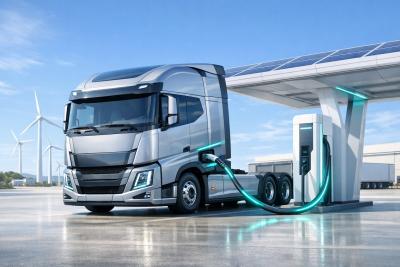
Volvo, a prominent onshore vehicle manufacturer in Australia, has been producing heavy-duty Volvo and Mack trucks at its Wacol plant in Brisbane's west since 1972, delivering over 80,000 trucks to date. The company's commitment to sustainable manufacturing is evident in its plans to produce electric trucks domestically.
Richard Lovell, CEFC's Executive Director, emphasizes the significance of this transition: "Switching to battery electric trucks is an important opportunity for freight operators and businesses to show real leadership on the path to net zero emissions, while managing a growing freight network and a stronger economy." He highlights that as other sectors decarbonize, transport is projected to become Australia's largest source of emissions by 2030.
The financing package offers Volvo customers an interest rate discount of up to 0.5% for leasing medium and heavy-duty battery electric trucks (HD BEVs) and installing EV charging infrastructure. Additionally, it includes support for an innovative residual value mechanism to reduce operating lease costs and bolster the future value of HD BEVs.
Martin Merrick, CEO of Volvo Group Australia, underscores the importance of this support: "We know the cost of entry is a significant hurdle to overcome for many of our customers wanting to take the first steps towards implementing electric transport solutions in their businesses." The program is designed to make the transition more affordable, enabling more customers to embark on the journey towards a fossil-free future.
David McGuire, Managing Director of Volvo Financial Services, adds: "This program is designed to make the transition more affordable, allowing more of our customers to take that first vital step towards a fossil-free future for the benefit of all Australians."
The CEFC has been actively investing in electric vehicle-related projects to decarbonize Australia's transport sector, with over $200 million committed to date. These investments include backing the country's first electrified bus fleet and expanding EV infrastructure through partnerships with companies like JET Charge.
This collaboration between CEFC and Volvo represents a significant step towards reducing emissions in the transport sector, providing financial incentives and support mechanisms to encourage the adoption of electric trucks across Australia.


