
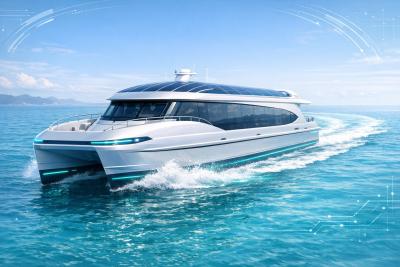
The forthcoming vessel will be equipped with a twin installation of the Volvo Penta IPS450E electric propulsion system, delivering 250 kW per driveline. This configuration marks a global first, showcasing the innovative strides being made in marine technology. Complementing the propulsion system, the ferry will feature a substantial onboard battery pack of 460 kWh, augmented by solar panels. This combination is designed to create a flexible and efficient energy ecosystem, tailored for real-world commercial operations.
Tommy Ericson, Director of Aus Ships, emphasized the significance of this project, stating that it represents a defining moment for the Australian marine industry. By merging shipbuilding expertise with advanced electric propulsion technology, the collaboration aims to deliver a pioneering vessel and establish a scalable model for future sustainable ferries across the region.
From a technical standpoint, progress is well underway. The Volvo Penta IPS drives have already been delivered, with additional electric components expected to arrive in the coming months. The majority of hardware is anticipated to be on-site by July, keeping the project on track for completion.
This collaboration also underscores Volvo Penta's broader electrification strategy. As the company continues to expand its hybrid and electric marine offerings, momentum is expected to build significantly through 2026 and 2027. William Bratt, Director of Sales and Marketing at Volvo Penta Marine, highlighted that electrification is no longer a future ambition but a present reality. By partnering with companies like Aus Ships, Volvo Penta is facilitating a transition that benefits operators and society through reduced emissions, quieter waterways, and more sustainable urban transport systems.
The implications of this project extend beyond environmental benefits. For Australian consumers, particularly those interested in marine finance options, the advent of electric ferries introduces new considerations. Prospective buyers and investors may find opportunities in financing electric marine vessels, which could offer long-term cost savings due to lower operational expenses and potential government incentives for sustainable initiatives.
As the marine industry continues to evolve, staying informed about such innovations is crucial. For those considering boat loans or investments in marine transportation, understanding the shift towards electric propulsion can provide valuable insights into future market trends and financing opportunities.



No comments yet. Be the first to share your thoughts.