
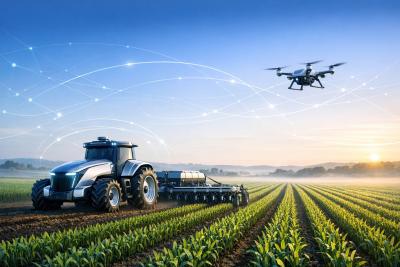
For farmers considering their next major machinery purchase, there are many practical considerations: automation may offer productivity gains, but the buying decision needs to be grounded in practical return on investment. The research, led by Grain Producers Australia, the Tractor and Machinery Association of Australia and the Society of Precision Agriculture Australia, points to strong interest across the sector, while also identifying affordability, set-up costs and patchy regional connectivity as major barriers.
This matters because autonomous machinery is not a simple replacement of one tractor, sprayer or seeder with another. It can involve software, connectivity, staff training, compatibility with existing implements, data management and ongoing technical support. That makes the finance conversation broader than the sticker price. Farmers may need to consider total establishment costs, expected labour savings, fuel and input efficiencies, servicing requirements and whether the technology can be scaled across multiple seasons.
For businesses already running on tight seasonal cash flow, this is where structured finance options may play an important role. Rather than viewing autonomous technology as an all-or-nothing purchase, producers may be able to stage adoption through upgrades, attachments, semi-autonomous systems or used machinery with compatible guidance features. This can help test the value of automation before committing to larger capital expenditure.
Connectivity is another finance consideration. A machine that depends on reliable digital infrastructure may not deliver full value if it is operating in an area with weak coverage. Before signing a purchase contract, growers should assess whether additional investment in connectivity, base stations or support services is needed. Those costs should be included when modelling repayments and payback periods.
The adoption pathway will vary by enterprise size, crop type, labour availability and risk appetite. For some farms, automation may help address worker shortages and improve timeliness during planting, spraying or harvest. For others, the better decision may be to wait for more field demonstrations, stronger dealer support or clearer evidence of whole-farm returns.
The broader trend, however, is difficult to ignore. As autonomous systems become more practical and manufacturers continue investing in Australian conditions, machinery finance will increasingly need to account for digital capability, not just horsepower, age and hours.



No comments yet. Be the first to share your thoughts.