

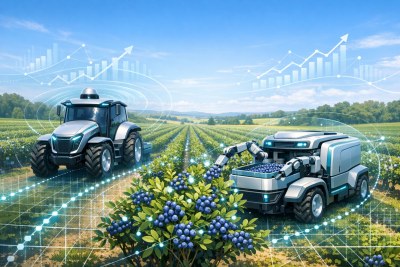
The reported example is a large horticultural operation north of Perth producing close to 1,500 tonnes of blueberries this year, with plans to substantially increase production. Its technology mix includes self-navigating tractors for spraying and transport, laser-guided weed control, automated grading and packing, and harvesters designed to reduce reliance on hand picking for suitable fruit. The business also made clear that people remain central, with more than 200 pickers still employed and only part of the crop expected to suit machine harvesting.
That balance matters for machinery finance thinking. Automation is often discussed as though it is a simple substitution of machines for labour, but in practice it can involve several linked costs: the machine itself, software, sensors, mapping, connectivity, staff training, repairs, service support and possible changes to crop varieties or layouts. A driverless tractor or smart harvester may also need to work alongside existing irrigation, trellising, packing and logistics systems before the benefits are fully visible.
For producers considering similar investments, the useful question is not whether new technology is impressive. It is whether the asset can earn its keep under realistic seasonal and market conditions. Factors to model generally include:
- how many hectares, rows, hours or tonnes the equipment can service each season;
- whether the machinery reduces peak labour exposure or simply shifts costs into technical support;
- how downtime, software issues or specialist servicing would affect harvest timing;
- whether repayments align with crop income, especially where benefits arrive over several seasons;
- how resale value, warranty coverage and upgrades may change whole-of-life cost.
The wider lesson is relevant beyond blueberries. As autonomous farm machinery moves from trial projects into more commercial settings, finance decisions may need to allow for data capability and operator skills as much as horsepower or capacity. Educational tools such as the Farm Equipment Finance Calculator can help illustrate repayment scenarios, but they remain estimates based on assumptions rather than offers, approvals or personalised recommendations.
Automation may help some farm businesses manage labour shortages and expand production, but it does not remove biological, weather or market uncertainty. The more realistic approach is staged planning: test the task, understand the support requirements, model conservative utilisation and make sure the finance structure does not assume perfect seasons or immediate savings.



No comments yet. Be the first to share your thoughts.