
SHARE

Share this news item!

Farizon F3E Arrives as a Practical Electric Work Truck Option

What the new light-duty EV means for operators planning their next purchase

Farizon F3E Arrives as a Practical Electric Work Truck Option?w=400

The information on this website is general in nature and does not take into account your objectives, financial situation, or needs. Consider seeking personal advice from a licensed adviser before acting on any information.

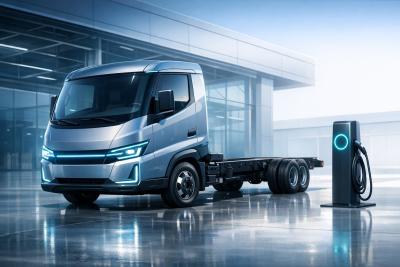
Farizon has put a sharper price point under Australia’s growing electric commercial vehicle market, with its new F3E electric cab chassis listed from $48,990.
For small businesses, delivery operators, tradies and service fleets, the launch adds another option between a van and a traditional light truck at a time when operating costs are under close scrutiny.

The F3E range is being offered in cab chassis, tray and cargo box configurations, with pricing stepping up to $50,990 for the tray and $53,490 for the cargo box. That spread is important for buyers because the vehicle is not being positioned as a one-size-fits-all EV. Instead, it gives operators a way to match the body style to the job, whether that means metropolitan parcel work, mobile trade services or lighter freight tasks.

Under the skin, the F3E uses a 72.8 kWh LFP battery and offers up to 314 kilometres of WLTP driving range. Payload is listed at up to 1705 kg, while charging capability includes 100 kW DC fast charging and 11 kW AC charging. For many urban and depot-based businesses, those figures make the vehicle worth assessing against daily route length, charging access, downtime windows and the cost of diesel alternatives.

From a finance perspective, the key question is not simply whether the purchase price is attractive. Buyers should consider whole-of-life cost, including charging infrastructure, expected energy use, servicing assumptions, residual value risk and whether the vehicle’s payload and range remain suitable when fully loaded. This is where modelling repayments alongside operating savings can give a clearer view than comparing sticker prices alone.

The F3E also extends a broader theme already visible in Australia’s 2026 light-duty market: more choice, more electric entries and more pressure on established brands to prove value. For owner-drivers and smaller fleets, that competition may be positive, but it can also make finance decisions more complex. Different lenders may take different views on newer brands, electric vehicle residuals and business-use assumptions.

Before committing, operators should check whether the F3E’s configuration suits the real workload, confirm charger access, compare warranty and support arrangements, and compare finance options across lenders rather than relying on a single quote. A lower entry price can be appealing, but the right truck loan should also support cash flow, tax planning and the ability to upgrade as the business grows.

Published:Monday, 6th Jul 2026
Author: Paige Estritori

Please Note: We do not endorse any specific products or companies. Some content is sourced from third parties, including press releases, and may not be independently verified for accuracy or completeness.

Share this news item:

Rate this article

0 Comments

No comments yet. Be the first to share your thoughts.

Finance News

Farizon F3E Arrives as a Practical Electric Work Truck Option
06 Jul 2026: Paige Estritori
Farizon has put a sharper price point under Australia’s growing electric commercial vehicle market, with its new F3E electric cab chassis listed from $48,990. For small businesses, delivery operators, tradies and service fleets, the launch adds another option between a van and a traditional light truck at a time when operating costs are under close scrutiny. - read more
Tesla and BYD Power a Record Month for Australian EV Buyers
05 Jul 2026: Paige Estritori
Australia’s electric vehicle market has moved into a new phase, with June 2026 delivering a standout result led by Tesla and BYD. Industry reporting shows battery electric vehicles reached about 23.4 per cent of new-vehicle sales for the month, while the two biggest EV brands delivered more than 19,000 electric cars between them. For households comparing a petrol replacement with an electric upgrade, this is more than a sales milestone. - read more
