


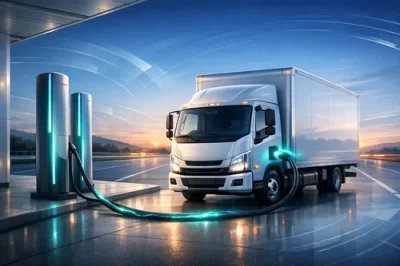
The company has unveiled electric vehicle charging at its dual Ampol Foodary M1 Wyong sites, developed with Ausgrid and charging technology provider Kwetta. The northbound site is already live, while the southbound location was scheduled to be available by late November 2026. Each site includes eight charging bays, with two drive-through bays intended to accommodate larger commercial vehicles as well as vehicles towing caravans or trailers.
For owner-drivers and small fleets, the most important point is not that one service centre now has chargers. It is that a major transport energy provider is testing a dynamic connection model on a freight-relevant corridor. Instead of relying only on traditional fixed network upgrades, the system can adjust available charging capacity according to network conditions. In plain terms, that could help high-capacity charging sites become easier to deploy where grid constraints would otherwise slow projects down.
That said, public charging should not be treated as a substitute for proper fleet planning. Electric truck economics depend on route length, battery size, payload, depot access, charging speed, dwell time, electricity pricing and vehicle utilisation. A truck that works well on predictable metro deliveries may be less suitable for longer or irregular tasks unless charging stops can be built into the operating schedule without hurting revenue.
The finance implications are also broader than the purchase price. Buyers considering an electric rigid, van or specialised truck may need to compare diesel and electric options across whole-of-life costs, including energy, maintenance, insurance, downtime and residual value uncertainty. If a business is modelling finance scenarios, repayment estimates can help illustrate how different purchase prices, deposits, terms and interest rate assumptions affect cash flow, but they do not replace lender pricing or professional advice.
The Wyong rollout is a positive infrastructure marker, particularly for operators already assessing lower-emission vehicles on fixed routes between Sydney, the Central Coast, Newcastle and nearby distribution points. However, it is still one piece of a larger transition. Before committing capital, businesses may wish to document realistic route data, confirm charging access, allow for seasonal freight variation and stress-test whether the truck can keep earning if public charging is busy, slower than expected or temporarily unavailable.



No comments yet. Be the first to share your thoughts.