


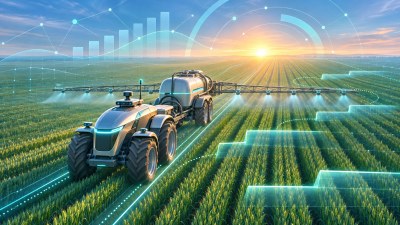
Grain Central has reported that Grain Producers Australia, the Tractor and Machinery Association of Australia and the Society of Precision Agriculture Australia have launched the 2026 Autonomous Farm Machinery Survey, open until 30 November. The survey is designed to track how growers are using, considering or rejecting autonomous and semi-autonomous equipment, including systems such as GPS guidance, autosteer and more advanced self-operating machinery.
The reported background figures are important for machinery planning. Previous survey work found semi-autonomous use among respondents had risen from 27 per cent to 45 per cent, while interest in learning more about autonomous machinery increased from 61 per cent to 69 per cent. At the same time, affordability as a barrier reportedly rose from 52 per cent to 68 per cent. That combination suggests the technology conversation is shifting from curiosity to a more disciplined capital decision.
For farm businesses, the finance issue is not limited to the purchase price. Autonomous and precision-linked machinery may also involve mapping, software, connectivity, training, servicing arrangements, insurance questions and the risk that an asset depends on support systems beyond the machine itself. A cheaper purchase may still be costly if it cannot be integrated into existing operations, while a more expensive system may need clear evidence of labour savings, timeliness gains, input efficiency or reduced operator fatigue before it can be justified.
This is where broader budgeting becomes useful. Farmers comparing a conventional replacement with a semi-autonomous upgrade may wish to test:
- the full financed amount after attachments, guidance hardware, setup and freight;
- whether projected savings are realistic across average, dry and high-yield seasons;
- how residual or balloon assumptions affect end-of-term risk;
- the impact of repairs, subscription costs and data connectivity on annual cash flow;
- whether seasonal repayment structures would better match income timing than equal monthly repayments.
Educational tools can also help farmers compare assumptions before speaking with advisers or providers. For example, a farm equipment finance calculator can illustrate how changes in deposit, trade-in value, term, indicative rate or balloon payment may affect repayments, while still remaining only a general estimate rather than a quote or approval outcome.
The survey will not answer every commercial question for individual farms, and self-reported industry data has limits. However, it should give growers, dealers and policy makers a clearer picture of whether automation is being held back mainly by price, confidence, connectivity or practical fit. For farmers considering their next machinery cycle, that evidence may prove as useful as the technology itself.



No comments yet. Be the first to share your thoughts.