

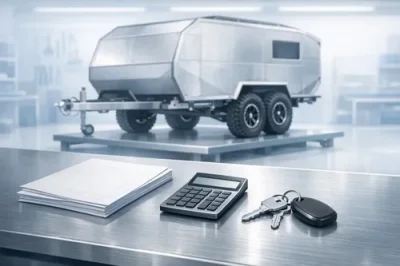
Australian Off Road, legally linked to Rhost Pty Ltd, had administrators appointed on 15 September 2026. Subsequent reporting has pointed to substantial debts, affected employees, suppliers and customers, and competing figures as administrators worked through the company’s position. For prospective buyers, the exact recovery outcome for creditors is less important than the broader lesson: a deposit or staged payment can carry different risks from a completed caravan sitting at a dealership ready for delivery.
That matters because many higher-value caravans and off-road hybrids are not bought like a simple second-hand vehicle. A buyer may place an initial deposit, wait months for a build slot, then make further payments before delivery. If finance is involved, the timing of loan approval, settlement and payment to the seller needs to be understood carefully. Paying borrowed funds too early may leave a household with repayments on a loan before the caravan is available, or before ownership and security details are clear.
Practical checks can include reading the purchase contract, confirming who receives each payment, asking what happens if delivery is delayed, and keeping written records of specifications, agreed dates and receipts. Buyers may also wish to check whether a vehicle identification number or chassis details exist, whether the caravan is completed, and whether the lender needs additional documents before funds are released. General information about deposits and fees can also help frame the budget discussion before money changes hands.
The AOR case should not be read as proof that every manufacturer is unsafe or that deposits are always inappropriate. Many caravan businesses continue to trade normally, and custom builds often require some commitment from the buyer. The point is that payment structure is part of affordability. A low advertised price, bonus pack or popular brand name does not remove the need to understand what is protected, what is not, and when the financial obligation begins.
Before committing to a new caravan, households can run conservative repayment scenarios using assumptions for price, deposit, term and rate. A Caravan Loan Repayment Calculator is only an estimate, not a quote or approval, but it can show how quickly total cost changes if delivery delays, extra accessories, insurance or a smaller deposit alter the borrowing plan.



No comments yet. Be the first to share your thoughts.