

SHARE

Share this news item!

Falling Used Car Values Put Trade-Ins Back in the EV Finance Spotlight

New market data shows cheaper EVs are reshaping resale assumptions for both buyers and existing car owners

Falling Used Car Values Put Trade-Ins Back in the EV Finance Spotlight?w=400

The information on this website is general in nature and does not take into account your objectives, financial situation, or needs. Consider seeking personal advice from a licensed adviser before acting on any information.

Australia’s used-car market is sending a fresh signal to electric vehicle shoppers: the value of the car being traded in may now be just as important as the price of the EV being bought.
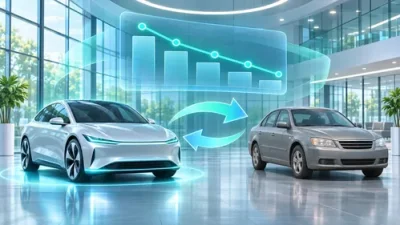
Recent reporting and industry data point to faster depreciation across parts of the petrol and diesel market, while near-new EV supply is also rising, creating both opportunity and uncertainty for buyers planning an ev loan.

ABC News reported on 19 November 2026 that petrol cars, excluding hybrids and plug-in hybrids, lost five times more value in 2026 than in the previous year, citing AutoGrab data. The same report noted that diesel SUVs had also come under pressure, although utes and large four-wheel drives were holding up better because there are fewer direct electric substitutes. That distinction matters: depreciation is not affecting every vehicle type equally, and resale outcomes still depend on make, model, age, condition, kilometres and local demand.

A separate AADA and AutoGrab market update dated 10 November 2026 showed the pressure building in near-new stock. It reported October used vehicle sales of 261,166, active listings of 411,479 and a sharp lift in dealer-held demonstrator and near-new EV stock since July. Used EV sales also increased in October, suggesting the market is not simply weakening; it is adjusting to more supply, more brands and sharper price competition.

For finance-minded buyers, the practical effect is straightforward. A lower trade-in value can increase the amount that needs to be borrowed, even if the replacement EV appears cheaper than expected. Conversely, stronger discounting on near-new or lightly used EVs may reduce the purchase price enough to offset some of that trade-in pressure. Modelling different purchase prices, deposits and trade-in values in an EV Loan Calculator can help illustrate how sensitive repayments may be to those inputs.

The market shift also raises questions for buyers choosing between a new or used EV. A used example may offer a lower entry price, but battery health, warranty transfer, service history, charging compatibility and future resale value remain important checks. EV Loan Hub’s guide to New and Used EVs: Finance Factors to Consider Before Applying explains these general considerations in more detail.

The key takeaway is not that one fuel type or finance structure is automatically better. It is that resale assumptions are changing quickly. Before relying on a trade-in estimate, advertised discount or expected future value, buyers may wish to compare several scenarios and leave room for movement in both vehicle prices and borrowing costs.

Published:Wednesday, 25th Nov 2026
Author: Paige Estritori

Please Note: We do not endorse any specific products or companies. Some content is sourced from third parties, including press releases, and may not be independently verified for accuracy or completeness.

Share this news item:

Rate this article

0 Comments

No comments yet. Be the first to share your thoughts.

Finance News

Cattle Levy Rise Gives Producers a New Cost to Plan For
26 Nov 2026: Paige Estritori
Grass-fed cattle producers have narrowly backed an increase in the national cattle transaction levy, turning an industry governance debate into a practical budgeting issue for livestock businesses. The vote, reported after Meat & Livestock Australia’s annual meeting in Townsville, approved lifting the levy from $5 to $6 per grass-fed animal sold, with the higher rate expected to begin from 1 July 2028 if linked transparency and reporting reforms are in place. - read more
Autonomous machinery survey puts cost hurdles back in view
26 Nov 2026: Paige Estritori
A fresh national survey of Australian grain growers is putting autonomous machinery back on the finance agenda, not because every farm is ready to buy driverless equipment, but because the gap between interest and affordable adoption is becoming harder to ignore. - read more
